
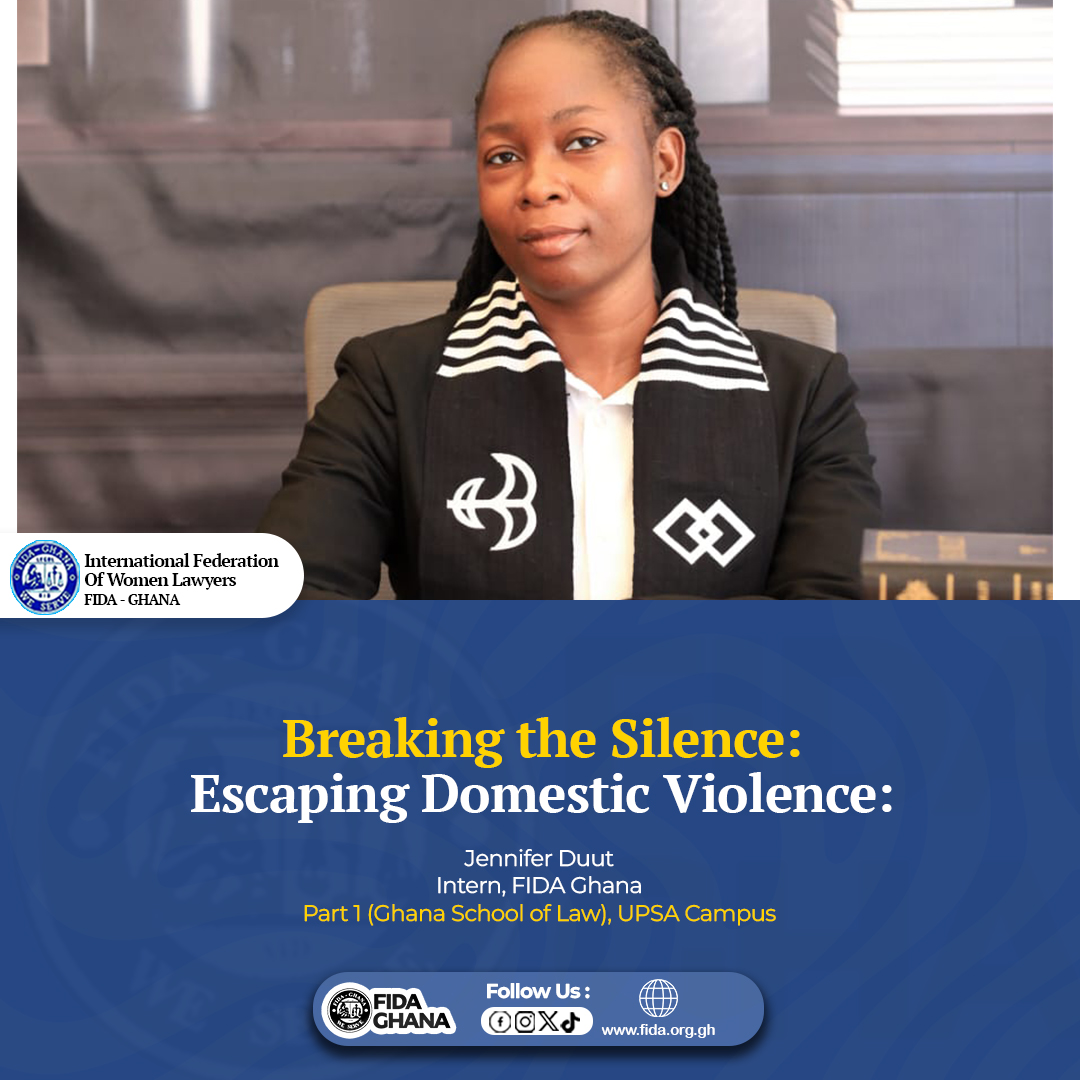
Breaking the Silence: Escaping Domestic Violence
Domestic violence can affect anyone, regardless of gender, but women, children, and other vulnerable groups are disproportionately impacted. It is a pervasive and often hidden issue that transcends gender, taking the form of physical, emotional, psychological, and economic abuse. While women are most commonly associated with being victims, statistics indicate that a significant number of men also suffer in silence due to societal stigma and shame.
In Ghana, the Domestic Violence Act 2007 (Act 732) provides a comprehensive legal framework for preventing and addressing domestic violence. The Act criminalizes various forms of abuse, including physical and sexual violence, psychological abuse, economic abuse, and intimidation within domestic relationships.
Domestic abuse often involves manipulation, isolation, and long-term trauma, making it difficult for victims to leave. It is important to recognize that domestic violence is not limited to physical harm; it also encompasses coercive control and psychological manipulation within any relationship. This is not merely a private matter—it is a pressing public health and human rights issue. Identifying warning signs, such as isolation from friends and family, extreme jealousy, or controlling behavior by a partner, is the first step toward breaking the silence.
Support systems, such as the International Federation of Women Lawyers (FIDA Ghana) and Legal Aid services, play a crucial role in helping victims. They provide counseling, free legal assistance, legal representation, and advocacy to protect the rights of women, children, and vulnerable individuals in society.
One notable example of FIDA Ghana’s impact is the case of Sarah, a woman trapped in an abusive relationship who feared for her safety and that of her children. Lacking the resources to leave, she sought FIDA Ghana’s legal aid services. Through their intervention, she obtained a restraining order against her abuser, navigated divorce proceedings, secured child custody, and was connected to local shelters and support networks—empowering her to rebuild her life.
Effectively addressing domestic violence requires collaboration between state and non-state actors. Together, we must work to protect and promote the rights of women, children, and vulnerable individuals. Ending domestic violence is a collective responsibility, and everyone has a role to play in creating safer communities.
Jennifer Duut
Intern, FIDA Ghana
Part 1 (Ghana School of Law), UPSA Campus